What an AI agent costs after launch
By Precipitate · 3 November 2026
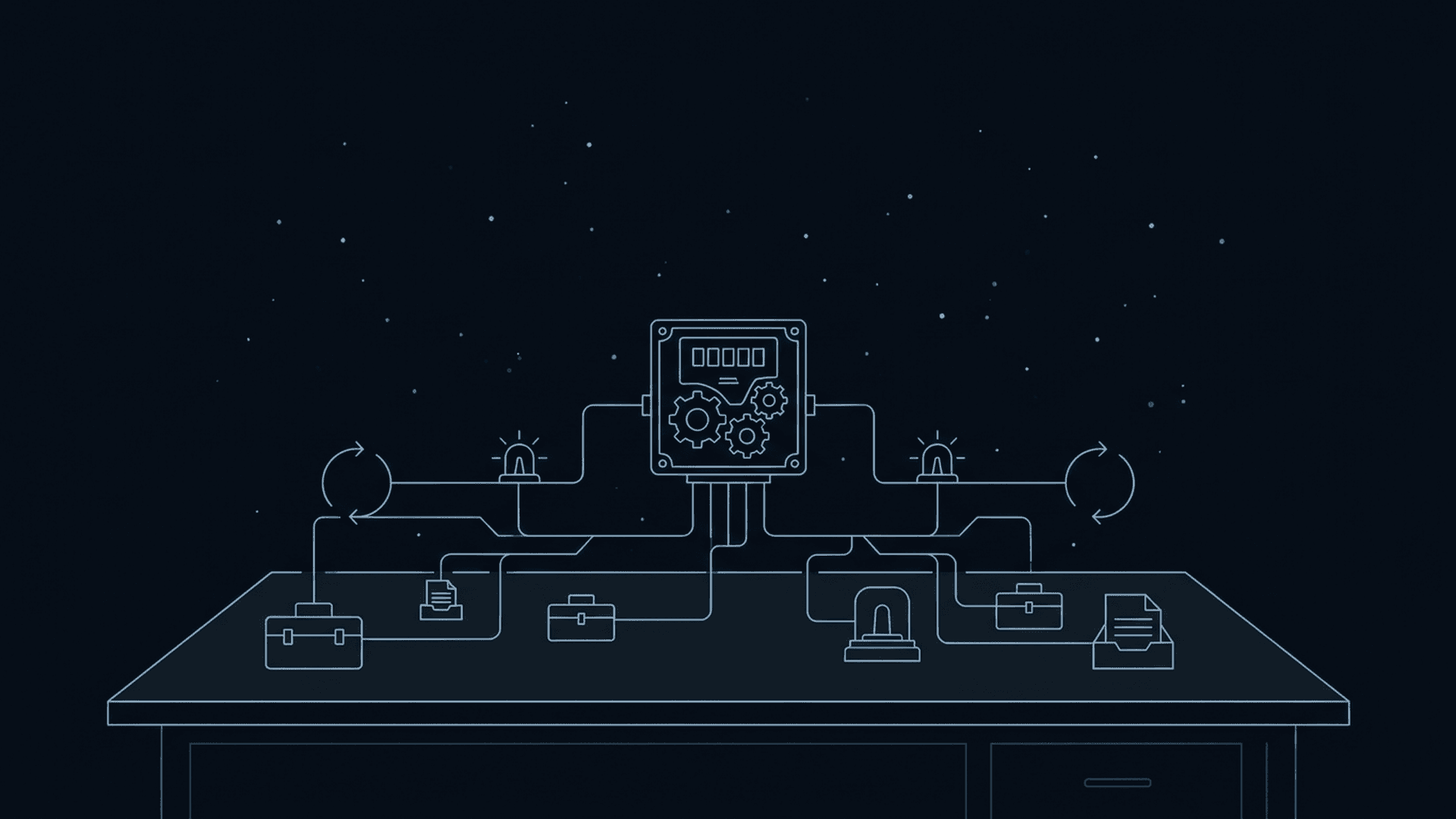
The cost to run an AI agent after launch includes every model call, connected tool, monitoring system, maintenance task, failed run, and human exception. The model bill is often the easiest part to see. The larger buying decision is whether the agent completes useful work reliably enough to justify the full operating cost.
Start with cost per completed task
A monthly software total tells you what left the bank account. It does not tell you what the agent accomplished. Measure operating cost against completed tasks that passed the required checks.
For a scheduling agent, that task might be a confirmed appointment recorded in the correct calendar. For a lead-handling agent, it might be a qualified enquiry added to the CRM with a valid follow-up date. Define completion before launch. Otherwise, a busy agent can look productive while leaving staff to repair its work.
CloudZero defines AI agent cost as model tokens across every step, tool and retrieval calls, and orchestration overhead. That definition matters because an agent loops through decisions and actions. A chatbot may produce a response, while an agent can inspect a record, call a tool, review the result, retry, and escalate.
CloudZero reports Anthropic's finding that agents and multi-agent systems used substantially more tokens than chat interactions. The useful lesson is not the multiplier alone. Every extra planning step, retry, and handoff adds consumption.
The visible bill has several moving parts
Model use is usually metered by input and output. Long instructions, large document searches, repeated history, and verbose responses all increase that use. A cheap model can still produce an expensive task if the agent calls it repeatedly.
Connected tools add another layer. Email platforms, phone systems, document services, databases, search services, and automation platforms may charge by subscription, seat, request, storage, or task. Some costs remain steady. Others rise with activity.
Infrastructure also matters. The agent needs somewhere to run, a scheduler or queue, secure credential storage, logs, alerts, and backups. A production system may also need separate test and live environments. These are ordinary software costs, but they are easy to omit from an AI estimate.
The distinction between a fixed workflow and an agent changes the budget. Our guide to how workflow automation differs from agentic AI explains when decision-making and retries are useful. If fixed rules can own the task, an agent may add cost without adding enough capability.
Failures create operating cost even when usage is low
A failed model call may cost very little by itself. The business cost can be much larger. A duplicate message, missed booking, wrong status, or silent integration failure can trigger manual investigation and correction.
Count retries, duplicate actions, incomplete tasks, and human repairs. Include the time required to discover the problem. A failure caught immediately has a different cost from a failure found after a customer calls.
This is why monitoring belongs in the operating budget. Logs should show what the agent saw, what it decided, which tool it called, and what happened next. Alerts should identify stalled jobs and unusual error patterns. Our article on where AI agents fail when they touch real systems covers common failure points around permissions, stale data, and changing interfaces.
Do not treat every retry as bad. A controlled retry can recover from a temporary service error. The problem is an unbounded loop or a retry that repeats a harmful action. The agent needs clear stopping rules.
Human exceptions are part of the system
An agent that interrupts staff constantly has shifted work rather than removed it. An agent that never interrupts staff may be acting beyond its authority. The correct balance depends on the consequence of a wrong decision.
Routine ambiguity can often be resolved through a clarifying question or a safe default. Refund approval, unusual contractual terms, sensitive customer complaints, and irreversible account changes may require a person. The boundary should be explicit.
Azilen describes Agent Ops as the post-launch work of observability, prompt versioning, feedback loops, and analytics. Azilen also identifies fallback logic as the rules used when an agent cannot answer confidently, such as escalation, clarification, or a safe default.
Track how often staff receive exceptions, how long each exception takes, and why it occurred. Repeated exceptions may reveal a missing rule, poor source data, or a task that should remain manual. Setting limits on what an AI agent can do alone is part of cost control because clear boundaries prevent expensive corrections.
Maintenance is normal operating work
Business software changes. Login methods expire, APIs change, forms gain fields, staff alter procedures, and source documents move. An agent can keep running while producing incomplete work unless someone checks the outcome.
Maintenance includes reviewing errors, updating prompts and rules, testing integrations, rotating credentials, checking permissions, and confirming that the agent still follows the current process. It also includes checking model changes before they reach live work.
Ask who owns this work after launch. A vendor may operate the system, hand maintenance to your staff, or divide responsibility. Each arrangement can work. The contract should state who receives alerts, who approves changes, and how urgent failures are handled.
A build quote and an operating estimate should be separate. The operating estimate should explain which costs vary with activity, which remain steady, and which maintenance duties sit with the business. Custom scope and pricing should reflect the actual workflow and its risk, rather than a generic agent label.
What to inspect before buying
Ask for the operating model in task terms. What starts a task? What marks it complete? How many model and tool calls can it make? When does it stop? Which actions require approval? These questions expose systems that have no practical cost controls.
Request access to useful records, not a vague dashboard. You should be able to trace a completed task and understand a failed one. The audit trails an AI agent should leave behind explains what that record should contain.
Check whether the vendor has budget alerts, retry limits, model routing, test environments, and a rollback process. Ask how changes are reviewed before release. A cheaper model call does not help if staff must inspect every result.
This week, choose a manual process and record its task volume, exception count, repair work, and required approvals. Those facts give you a usable baseline for judging an AI agent's operating cost.
Sources
Want this answered for your own business?
Get a straight answer →